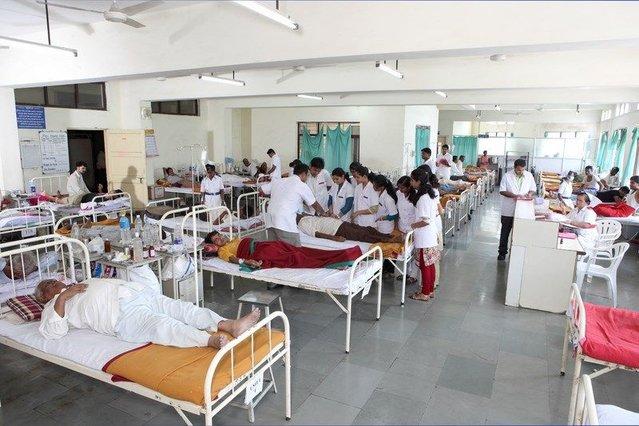
Hospitals have become the default destination for healthcare even when many health needs could be prevented, managed, or treated outside hospital walls. This creates a chain reaction of inefficiencies, higher costs, poorer patient outcomes, and growing pressure on an already overstretched healthcare workforce.
The Current Model
The patient journey in India often looks like this:
Person falls sick --> Wait until symptoms become severe --> Visit hospital --> Consult specialist --> Tests and procedures --> Discharge
↓
Little or no follow-up --> Condition worsens --> Hospital again
Healthcare is therefore reactive, not proactive.
Why Hospitals Became the Center
Several historical factors contributed:
- Public health investment focused on hospitals.
- Health insurance mainly reimburses hospitalization.
- Citizens perceive hospitals as the only trustworthy providers.
- Primary care remains fragmented.
- Home healthcare has traditionally been viewed as nursing rather than clinical care.
As a result, Hospitals are solving problems that should never have reached hospitals.
The Consequences
1. Hospitals treat disease, not health
Hospitals excel at Surgery, Emergencies, ICU care, Trauma, and Complex diagnostics.
But they are poorly designed for Prevention, Lifestyle coaching, Medication adherence, Long-term monitoring, Eldercare, Rehabilitation, and Family education.
These account for a large share of the country's health burden.
2. Chronic diseases require continuous care
India has over 100 million people with diabetes, millions with hypertension, COPD, heart disease, arthritis, and kidney disease.
These conditions require regular monitoring, medication adjustments, nutrition guidance, exercise, behavior change, and family engagement.
A hospital visit every few months cannot deliver this continuity.
3. Hospitals become overcrowded
Doctors spend time managing uncomplicated fever, blood pressure checks, diabetes follow-up, dressing changes, injections, and medication refills.
This reduces capacity for patients who genuinely need hospital-level care.
4. Healthcare becomes expensive
Hospitals have high fixed costs such as buildings, equipment, operating theatres, ICUs, administrative staff.
Using these resources for routine care raises overall healthcare costs.
Preventive home-based care is often far less expensive than repeated hospital admissions.
5. Elderly patients suffer the most
Older adults typically have multiple chronic illnesses, reduced mobility, cognitive decline, polypharmacy, fall risk, etc.
Frequent hospital visits and prolonged hospital stay lead to stress, emotional distress, infections, delirium, and financial hardship.
Many of these patients would benefit more from coordinated care at home.
6. Care is fragmented
A patient may see physician, cardiologist, diabetologist, nephrologist, neurologist but, often, no one coordinates the overall care plan. The patient and family become the de facto care coordinators.
7. No one owns the patient's health between hospital visits
A person may spend 2 hours with clinicians annually, and 8,700+ hours at home.
Health outcomes depend largely on what happens outside the hospital i.e. medication adherence, diet, sleep, activity, blood pressure, glucose monitoring, falls, caregiver support.
These are rarely monitored systematically.
What do you think could be good solution to this problem?
Please share your views in comments.


Home healthcare is no longer just a convenience, it is becoming an essential part of managing chronic diseases, post-hospital recovery, elderly care, and rehabilitation. A well-designed Home First model can improve patient outcomes, reduce healthcare costs, and ease the burden on overcrowded hospitals.
A very relevant perspective. The future of healthcare lies in shifting from reactive treatment to proactive, patient-centric care. Strengthening home healthcare and preventive care can improve outcomes while reducing the burden on hospitals.
The missing piece is continuous monitoring between hospital visits. Wearables, remote patient monitoring, AI, and proactive care teams can bridge this gap and alert clinicians before conditions become emergencies.
Time is most critical in preventing disease to worsen. With the present sociogrographical fabric, timely consultation is a challenge. We need to understand, know how to prevent reaching hospital, when to visit hospital and how to get help in time. Digitalisation of health care, though not replacement but can take care of some of these aspects. Change with time; a stitch in time saves nine.