HEALTHCARE LEADERSHIP & INNOVATION
The Doctor Who Knows Your Family: The Missing Connection in Modern Healthcare
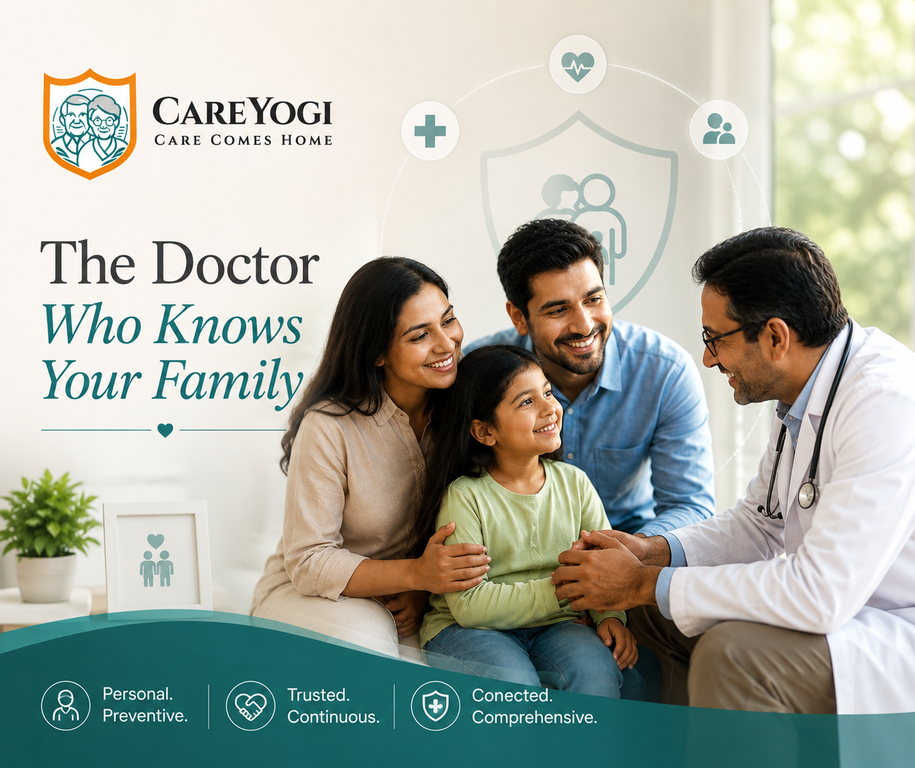
Healthcare has become remarkably good at understanding disease. But does it still understand people? As medicine advances into digital spaces, bridging clinical data with personal context has never been more critical.
Medicine today can look inside the human body with extraordinary precision. We have super-specialists, advanced diagnostics, digital records, artificial intelligence, and more medical information available than ever before. Yet, somewhere in this rapid technological progress, modern medicine may have overlooked something remarkably simple: a doctor who truly knows you.
Not just your name, your latest diagnostic report, or the isolated symptom that brought you into the consultation room today. But a doctor who knows your medical history, your family's history, recurring health concerns, previous treatments, active medications, lifestyle, and the small personal details that may never appear in a standardized medical report—yet matter immensely when the whole picture is considered.
What Is a Family Doctor?
A Family Doctor is more than a General Physician who treats common illnesses. They are a long-term healthcare partner who understands health as a journey rather than a series of disconnected appointments. For generations, Family Doctors were often the first person a family turned to when something felt wrong. Over time, they came to know multiple generations—their illnesses, medications, previous treatments, lifestyle patterns, and recurring health concerns. That deep continuity creates something modern healthcare can easily lose: Context.
A specialist may know a disease exceptionally well. A Family Doctor knows the patient in context. And that distinction matters.
Why Does a Family Need One?
Consider something as ordinary as a persistent headache. Today, a patient may begin with a search engine and, within minutes, find possibilities ranging from stress and poor sleep to migraine, hypertension, or neurological conditions. Information is abundant. Understanding is not always.
Now imagine the same patient speaking first to a doctor who has known them for years. The doctor may already know their sleep patterns, previous migraines, medications, lifestyle changes, stress levels, or family history. The headache is no longer an isolated symptom; it becomes one piece of a larger health story. That is the power of continuity. It does not mean the Family Doctor replaces a specialist. When specialised expertise is required, the Family Doctor can help identify the right direction, provide relevant medical context, and make the patient's healthcare journey more coordinated rather than fragmented.
How Does a Family Doctor Help?
The role extends far beyond treating everyday illnesses. A Family Doctor provides the first layer of clinical guidance, helps determine when further investigation may be necessary, supports preventive care and health screening, contributes to vaccination and chronic disease management, and helps patients navigate specialist care when it is needed. But perhaps their most valuable contribution is something harder to measure: Trust. People often discuss things with a familiar doctor that they may hesitate to share with someone they have just met—stress, lifestyle changes, sleep problems, emotional concerns, or family circumstances. These details may never appear in a blood test, yet they can change the clinical conversation.
Where Technology Fits
Technology should not compete with the relationship between a patient and their doctor—it should strengthen it. A new generation of healthcare is emerging around the idea of a Digital Hospital: not simply a hospital with more technology, but a connected healthcare ecosystem that keeps patients, doctors, medical information and ongoing care connected. A connected ecosystem such as Care Yogi can help make this continuity possible, keeping the Family Doctor relationship at the centre even when life takes a patient somewhere else. The future should not be human care versus digital healthcare. It should be human care strengthened by digital healthcare.
When Life Takes You Somewhere Else
One of the biggest advantages of this connected model becomes clear when a patient moves, travels, or spends an extended period in another state. Traditionally, one of the first questions is simple but stressful: Where do I find a new doctor? More importantly, how do I explain my entire medical history again? A new doctor may need to understand previous diagnoses, medications, treatments, family history, recurring health concerns, allergies, lifestyle patterns and the decisions that have shaped the patient's care over time. For the patient, repeating that story can feel exhausting. For the new doctor, rebuilding that context can take time.
This is where the Family Doctor concept becomes a powerful problem solver within aDigital Hospital. The patient's relationship with their trusted Family Doctor does not have to stop at the state border. Instead, the doctor who already knows the patient can remain part of the healthcare journey through a connected digital ecosystem. When care is needed elsewhere, the patient's existing medical context can help connect that familiar relationship with the doctors and services available at the new location. The patient does not have to start from zero, and the new clinician does not have to begin with a blank page.
Family Doctor or Specialist?
The question should never be 'Family Doctor or Specialist?' It should be: Family Doctor AND Specialist. One provides continuity, prevention, early assessment, and coordination. The other brings specialised depth when the situation demands it. One understands the broader journey; the other understands the specialised problem. Together, they create something modern healthcare needs more of: Continuity with expertise.
Perhaps This Is What Advanced Healthcare Should Mean
We often measure progress through sophisticated machines, intelligent algorithms, rapid diagnostics, and access to specialised expertise. Perhaps we should add another measure: How well does our healthcare system know the person behind the patient?
A patient should not have to become their own medical historian every time they enter a consultation room. They should not have to remember every medication, diagnosis, investigation, or detail of their family's health history. The more complex healthcare becomes, the more valuable it may be to have one familiar doctor who can step back, see the bigger picture, and say: “I know your history. Now let's understand what is happening today.”
Perhaps the future of healthcare is not about making patients feel more like data points. Perhaps it is about building a healthcare system where, despite all the technology, the patient still feels known. Because the most advanced healthcare may ultimately be the healthcare that never forgets the human story behind the medical record.
#FamilyDoctor
#FamilyHealthcare
#PrimaryCare
#ContinuityOfCare
#PreventiveHealthcare
#PatientCentricCare
#DigitalHealthcare
#HealthcareInnovation
#FutureOfHealthcare
#CareYogi

No comments yet. Login to start a new discussion Start a new discussion